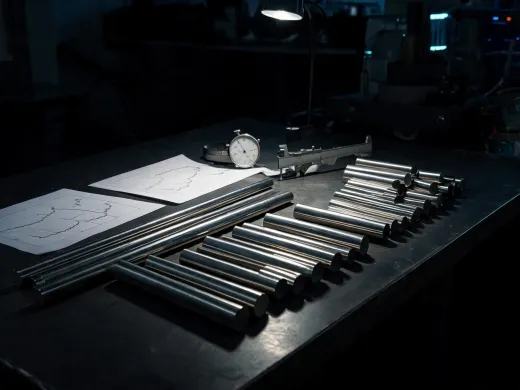
Alloy finder intake
The team starts with alloy family, industry, temperature range, corrosion exposure, wear type and documentation flow-down. The output is a tighter candidate set for sourcing and testing.
Metallurgy
This is the technical desk for refractory metal and carbide material decisions. The focus is alloy finder logic, property comparison, metallurgical lab review and quality credentials for demanding metal programs.

Property Logic
The team starts with alloy family, industry, temperature range, corrosion exposure, wear type and documentation flow-down. The output is a tighter candidate set for sourcing and testing.
Hardness, toughness, density, thermal conductivity, machinability and oxidation behavior are reviewed together, because a single impressive property can hide a failure risk elsewhere.
Microstructure notes, heat-treatment questions and inspection checkpoints help teams understand why a grade was recommended and how to verify it during production.
Lab View
Metallurgy stays inside material engineering. The decision path is narrow and useful: define the operating window, compare the property matrix, review lab evidence and document the final route, so a grade recommendation can be verified rather than simply trusted.
In practice, the review often begins with a simple conflict: the buyer needs longer wear life, but the machinist needs an edge that will not chip, and the quality team needs a certificate package that matches the customer flow-down. Kennametal treats those needs as connected. A harder carbide can reduce abrasion and still create fracture risk. A refractory metal can survive heat and still need atmosphere control. A specialty steel can meet chemistry and still miss the production target if heat treatment or grinding response is ignored.
Alloy finder request
Include grade history, temperature range, wear mode, atmosphere and documentation requirements so the recommendation can be specific.
Request Metallurgy Review